
What Is Deep Tooth Decay?
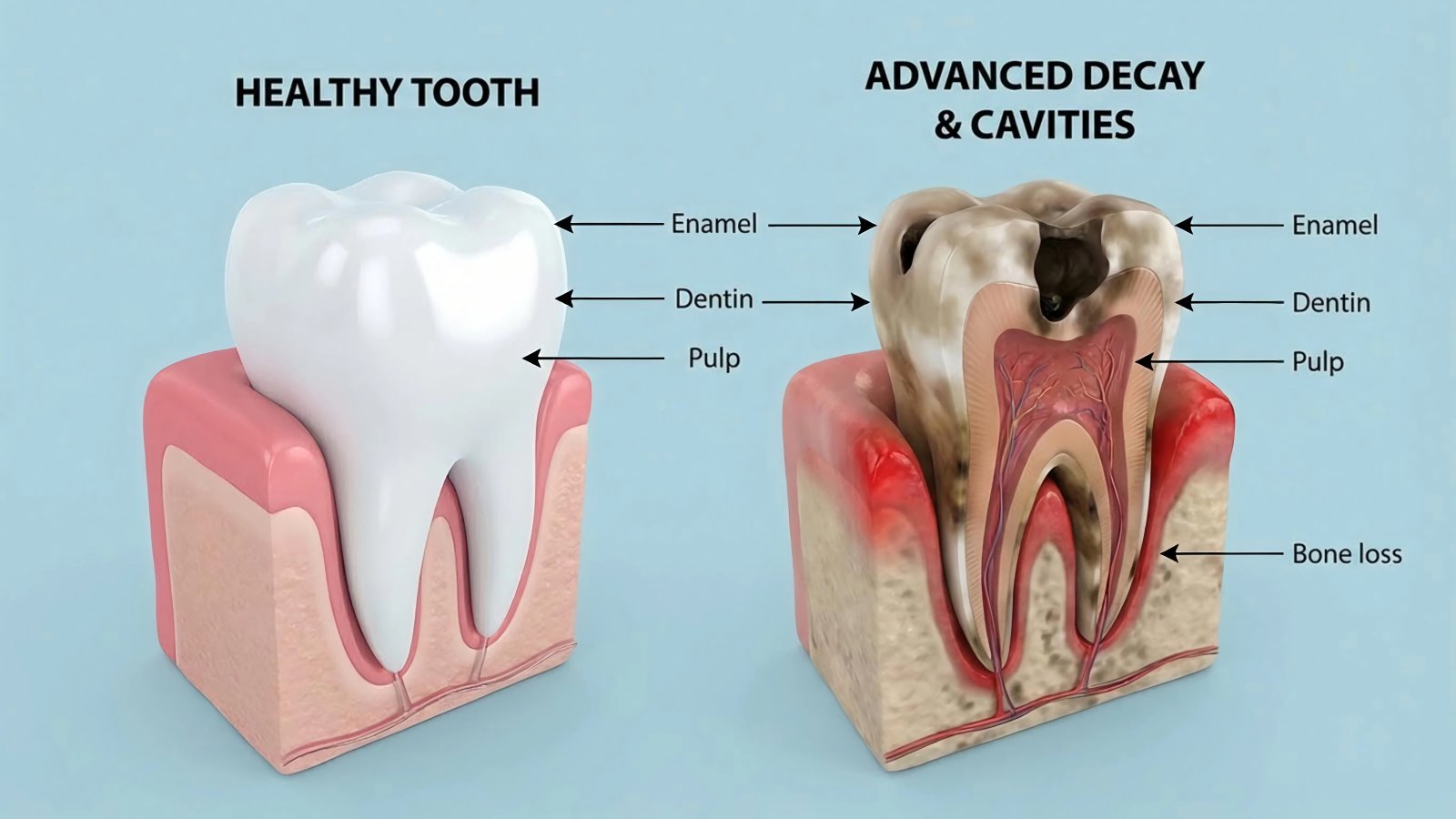
Deep tooth decay is a serious dental problem. It happens when a cavity grows so large that it reaches the inner layers of your tooth. At first, decay starts on the surface. However, if left untreated, it can move deeper. Eventually, it may reach the nerve inside your tooth. This can lead to tooth nerve pain and other issues. According to the World Health Organization, untreated tooth decay is one of the most common health problems worldwide.
How Does Tooth Decay Reach the Nerve?
Tooth decay begins when bacteria in your mouth break down sugars. This process creates acids that wear away the tooth’s hard outer layer, called enamel. Over time, the decay can move through the next layer, called dentin. If the cavity keeps growing, it may reach the pulp. The pulp is the soft center of your tooth that holds nerves and blood vessels. Once decay gets this far, it can cause nerve pain and infection. In many cases, deep cavities are the main reason for nerve damage in teeth.
Symptoms of Deep Tooth Decay Affecting the Nerve
When decay reaches the nerve, you may notice several signs. For example, you might feel sharp or throbbing pain. Sometimes, the pain gets worse when you eat or drink something hot, cold, or sweet. Other symptoms can include:
In some cases, the pain may stop if the nerve dies. However, this does not mean the problem is gone. Instead, it can lead to a serious infection.
Causes and Risk Factors
Many things can lead to deep tooth decay. Most often, poor brushing and flossing habits allow plaque to build up. As a result, bacteria have more time to damage your teeth. Other risk factors include:
Because some people have softer enamel, they may be more likely to get deep cavities.
Diagnosis: How Dentists Detect Nerve Involvement
Dentists use several methods to check for deep tooth decay and nerve damage. First, they will ask about your symptoms, such as tooth nerve pain or swelling. Next, they may examine your mouth and tap on the tooth to check for pain. Often, X-rays are used to see how far the decay has spread. In some cases, dentists may use special tests to check if the nerve is still alive. Early diagnosis can help prevent more serious problems.
Treatment Options for Deep Tooth Decay Reaching the Nerve
Once decay reaches the nerve, quick treatment is important. The main goal is to save your tooth and stop the pain. Common treatment options include:
After treatment, your dentist will explain how to care for your tooth and prevent future problems.
Prevention Tips for Protecting Tooth Nerves
Preventing deep tooth decay is easier than treating it. For example, you can keep your teeth healthy by:
Because early cavities do not always cause pain, regular dental visits are very important. This way, your dentist can spot problems before they reach the nerve.
Lifestyle and Home Care Guidance
Even after treatment, caring for your teeth at home is key. For instance, use a soft-bristled toothbrush and gentle strokes to avoid harming your gums. Additionally, avoid chewing hard foods or ice, which can crack teeth. If you notice signs of nerve damage in teeth, such as pain or swelling, contact your dentist right away. Eating a balanced diet with plenty of fruits and vegetables can also help keep your teeth strong. Finally, ask your dentist about sealants or fluoride treatments if you are at higher risk for deep cavities. These steps can help you prevent deep tooth decay and protect your tooth nerves.